
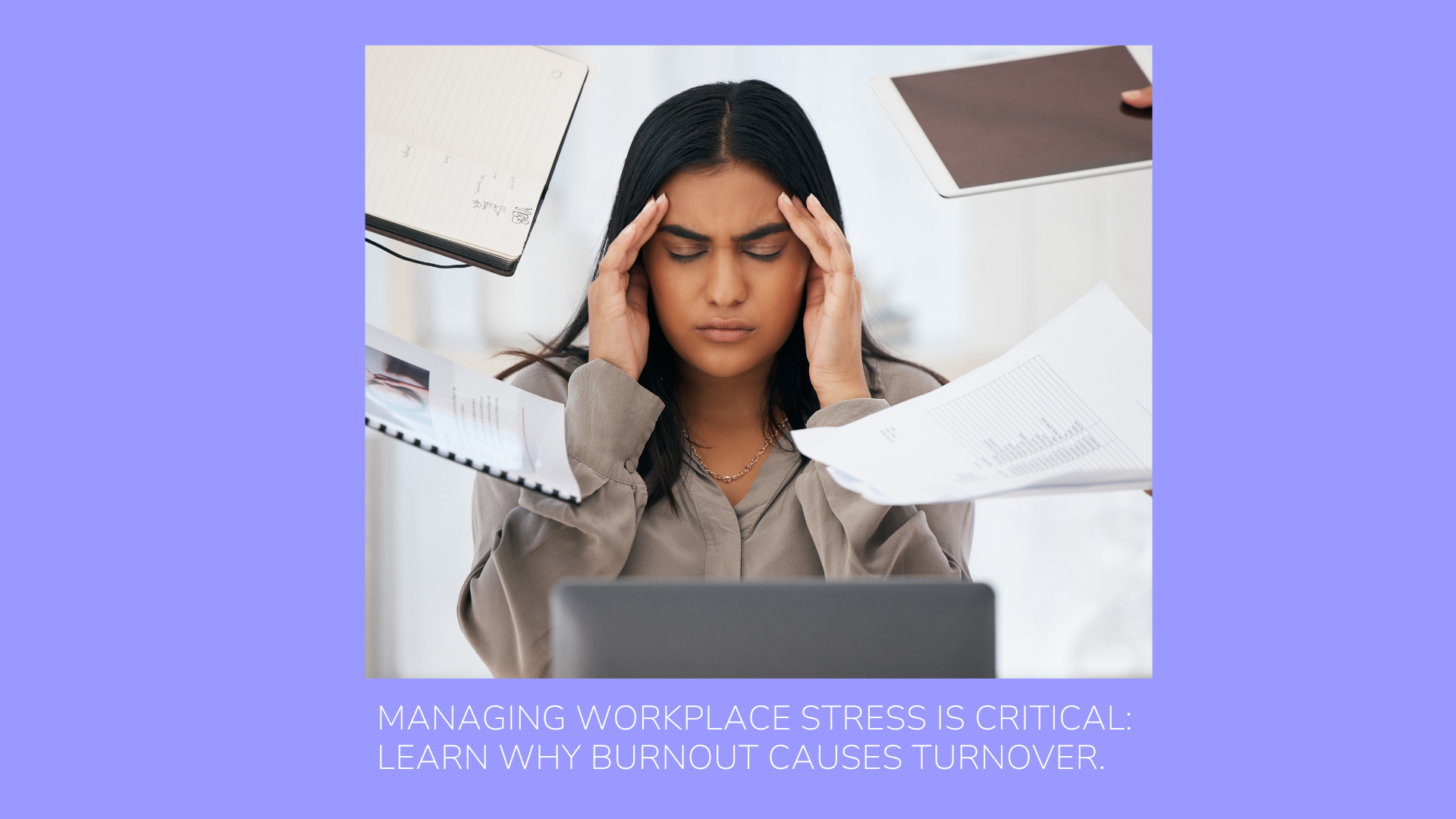
 In the past few years, workplace stress has become an epidemic. According to a 2021 report from the American Institute of Stress, nearly a third of US workers say job stress is the number one stressor in their lives. Workload is cited as the most common source of workplace stress, along with lack of supervisor support, lack of autonomy, inadequate resources, and long working hours. Though the concept of job stress is nothing new, organizations may be mishandling it. Research found that employers most often focus on wellbeing programs to manage stress, though consideration of organizational factors is equally important for effective management.
When employees feel stressed at work, it affects their organizations too. Job-related stress is estimated to cost US companies more than $300B in lost productivity and absenteeism each year.
The causes and effects of workplace stress
Workplace stress is a serious health hazard for employees and a detriment to your bottom line. You want employees to show up engaged, motivated, and determined to achieve their goals. But when your people are suffering from workplace stress, you’ll often see the opposite – fatigue, low productivity, and low morale.
What causes stress at work? Stressors at work vary greatly across individuals, but generally begins with:
- Lack of safety in physical work environment
- Lack of work/life balance
- Long hours, excessive workload
- Lack of autonomy
- Job insecurity or financial hardship
- Lack of trust in leadership
- Lack of communication at work
- Toxic or psychologically harmful work environment
A stressed-out employee may not feel confident enough to come forward with how they feel or ask for support, making it more likely that their stress will continue. The employee may start to experience feelings of anxiety, depression, and low morale. They may also have trouble sleeping. Stressed-out employees might present as irritable or short-tempered, which can lead to issues with collaboration in the workplace.
Carrying the burden of this stress home is likely to impact the employee’s personal life. At home, stress can become “contagious” and take a toll on family relationships. This is especially the case for those working remotely where the divide between work and home is less distinct.
Organizational impacts
Widespread workplace stress often leads to burnout, and burnout leads to lower engagement levels and increased turnover.
Stressed employees won’t perform to the best of their ability, and the more stress employees are under, the less equipped they’ll be to help your organization achieve its goals:
Absenteeism: Stress influences an employee’s presence at work, both physically and mentally. Highly stressed individuals will be more inclined to take time off for doctor’s visits or sick days. Even when stressed employees show up at work, they are more likely to feel detached from the work they’re doing due to the mental strain that stress is placing on them.
Poor performance: If an employee is struggling to feel connected to their work due to stress, or is physically or mentally absent on a frequent basis, the work they do won’t be as strong. For target-based roles or employees who have OKRs, stress will influence how likely they are to hit those targets. This isn’t ideal for the individual or your company’s financials.
Turnover and retention: Employees who feel their stress is unmanageable will eventually seek a new role elsewhere, especially if the stress stems from the workplace itself. A culture that ignores stress will lead to higher turnover and struggles to retain high performers. Remember, highly engaged employees can still feel stressed or burnt out below the surface.
Reducing stress in the workplace starts with awareness. If you notice that your stress level is high or that your direct reports are showing signs of stress, don’t ignore it. Instead, take steps to mitigate the problem as quickly as possible. Emphasize the importance of employee wellbeing, and create a workplace culture where stress is an occasional challenge, not a daily burden.
References and Resources:
American Institute of Stress. (2021).Workplace Stress. https://www.stress.org/workplace-stress#:~:text=83%25%20of%20US%20workers%20suffer,stress%20affects%20their%20personal%20relationships
Lagrosen, S. & Lagrosen, Y. (2022). Workplace stress and health – the connection to quality management. Total Quality Management & Business Excellence, 33(1-2), 113–126. https://doi.org/10.1080/14783363.2020.1807317
Maulik, P. (2017). Workplace stress: A neglected aspect of mental health wellbeing. Indian Journal of Medical Research, 146(4), 441–444. https://doi.org/10.4103/ijmr.IJMR_1298_17
Occupational Health and Safety Administration. (2021). Workplace Stress. https://www.osha.gov/workplace-stress/employer-guidance